









Interactive Play Equipment:
Why the Best Venues Are Moving Beyond Traditional Soft Play
The venues seeing the strongest footfall growth aren't just adding more soft play.
They're installing interactive equipment that changes how visitors behave and how often they come back.
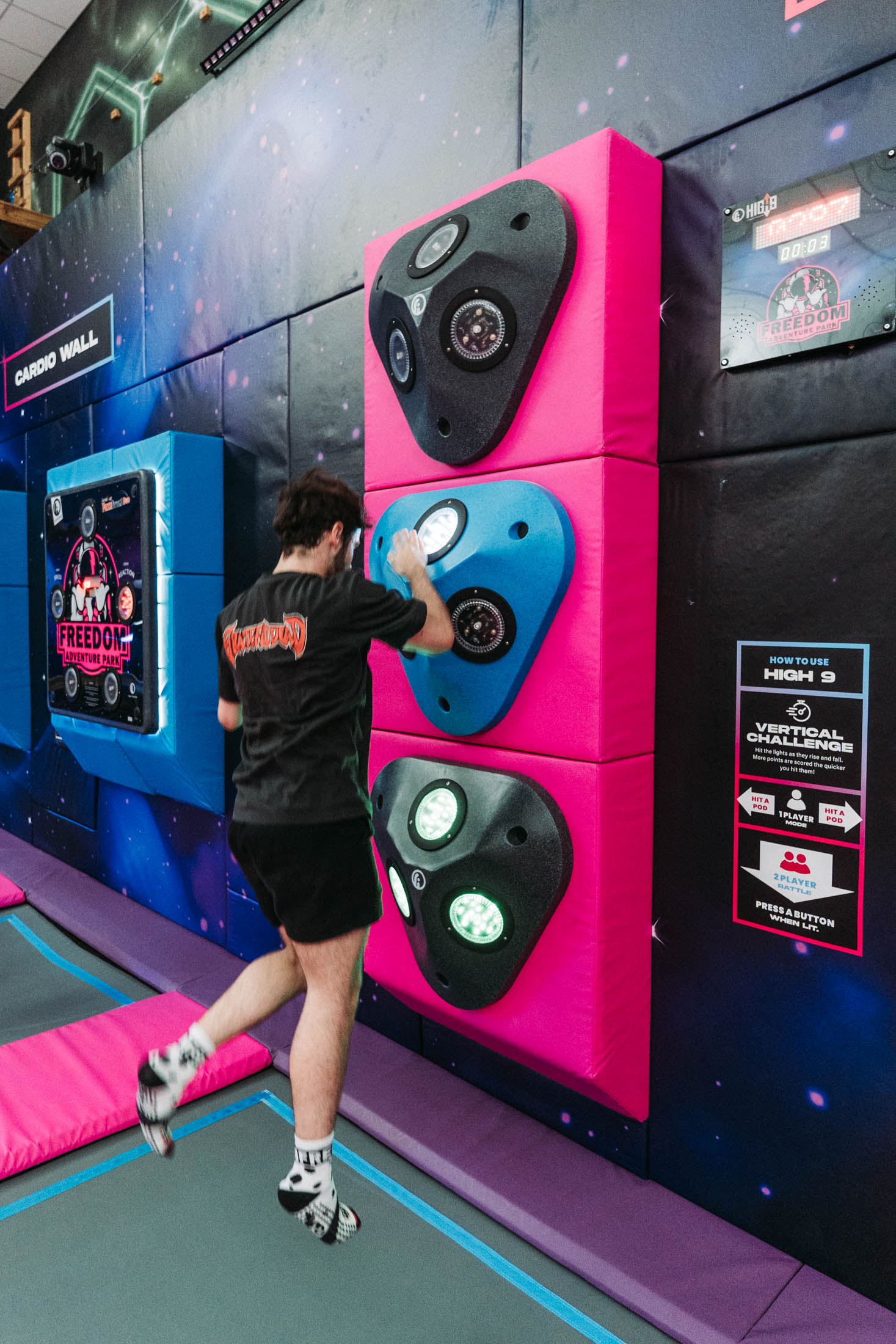
Walk into a well-run leisure centre, holiday park, or family entertainment centre today, and you’ll notice something. The kids aren’t just climbing, running and crawling. They’re dodging lasers, swinging at digital targets, competing on interactive scoreboards, and dragging their parents back for a second go before they’ve even caught their breath from the first.
That’s not an accident. It’s a deliberate shift in how the best operators in the UK and internationally are thinking about their play offering. Traditional soft play, think tunnels, ball pits, foam structures, all still has its place, it’s just no longer enough on its own to drive the repeat visits, dwell time, and revenue that modern venues need to stay competitive.
Here at The Play Company, we design, manufacture, and install play environments across leisure centres, holiday parks, and family entertainment centres, and over the past few years, we’ve seen a clear pattern emerge: the venues investing in interactive play equipment are the ones growing.
Here’s why, and what it means for your venue.
Here Are Some Stats
What has changed with indoor play spaces and why does it now matter?
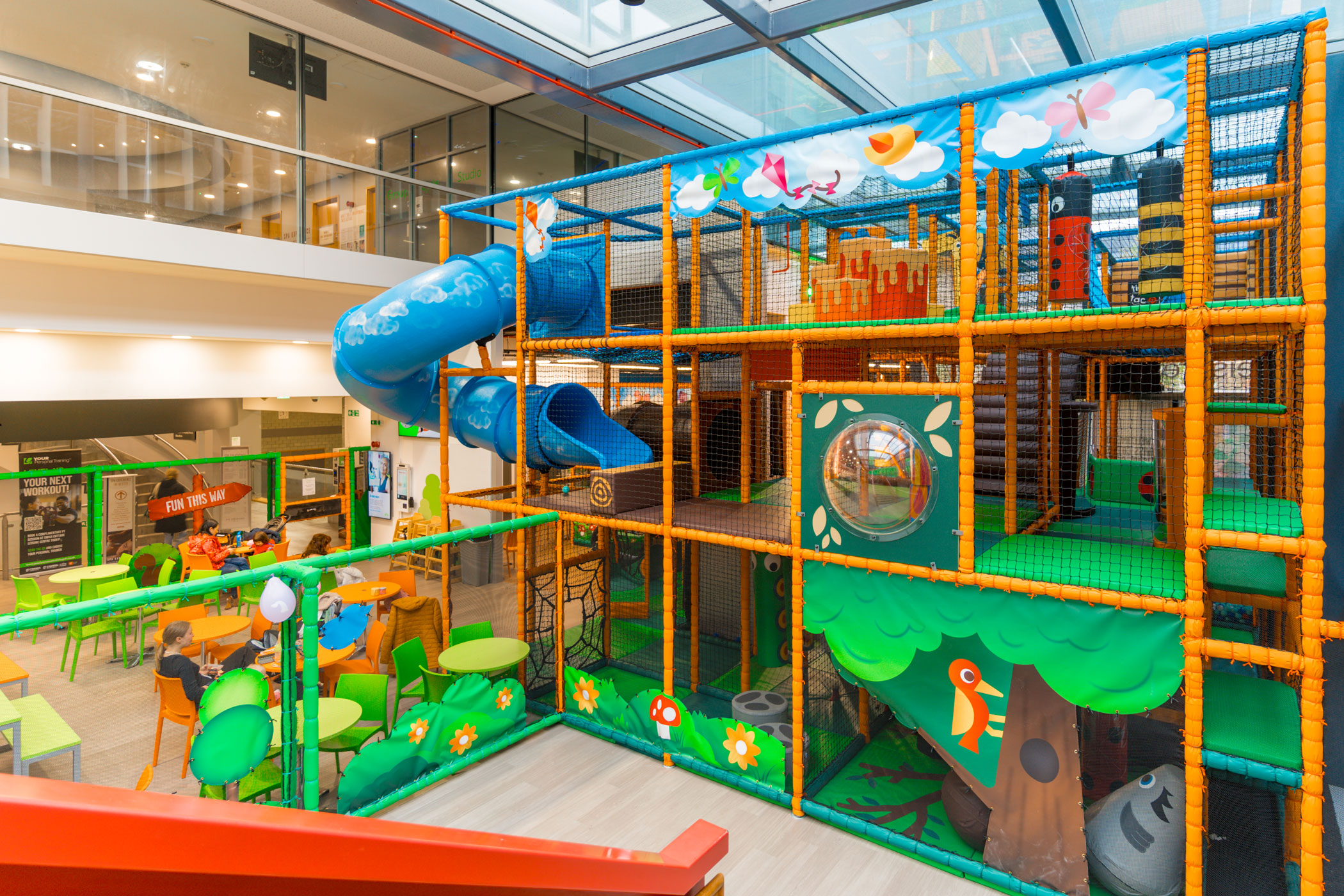
Soft play had a golden era. For a generation of leisure venue operators, a well-designed soft play structure was a reliable anchor attraction and something to point families towards and collect an entry fee from. The formula worked because the alternatives were limited and consumer expectations were lower.
That’s shifted significantly since 2020. As IAAPA research consistently shows, families emerging from the pandemic developed a much stronger appetite for experiences that feel active, social, and worth leaving the house for. Passive entertainment ( something you watch or move around in) isn’t generating the dwell time or profit it used to.
The venues feeling this pressure most acutely are the ones where their soft play hasn’t changed in five or more years. Where the equipment looks dated, and where children who visited aged four are now eight and bored with it. Parents don’t feel the need to come back because nothing has changed.
"The question we're asked most often isn't 'should we update our soft play?', it's 'how do we make people want to come back next week, not next year?'"
The answer to that question, increasingly, is interactive play equipment.
Not because soft play is dead or outdated, but because interactive equipment changes the entire dynamic of a visit and the guest’s outcome. They create competition, progression, and novelty that keep the experience feeling fresh no matter how many times a guest returns.
What has changed and why does it matter now?
Soft play had a golden era. For a generation of leisure venue operators, a well-designed soft play structure was a reliable anchor attraction; it is something to point families towards and collect an entry fee from. The formula worked because the alternatives were limited and consumer expectations were lower.
That’s shifted significantly since 2020. As IAAPA research consistently shows, families emerging from the pandemic developed a much stronger appetite for experiences that feel active, social, and worth leaving the house for. Passive entertainment, just something you watch or simply move around in, isn’t generating the dwell time it used to.
The venues feeling this pressure most acutely are the ones where their soft play hasn’t changed in five or more years. The equipment looks dated. Children who visited aged four are now eight and bored with it. Parents don’t feel the need to come back because nothing has changed.
"The question we're asked most often isn't 'should we update our soft play?', it's 'how do we make people want to come back next week, not next year?'"
The answer to that question, increasingly, is the integration of interactive play equipment.
Not because soft play is dead, but because interactive elements change the entire dynamic of a visit and they create competition, progression, and a novelty that keeps the experience feeling fresh, no matter how many times a guest returns.
Download: The Interactive Play Equipment Lookbook
Real installations, product specifications, and ROI data from venues across the UK. Free for leisure operators and venue managers.
What interactive play equipment actually means
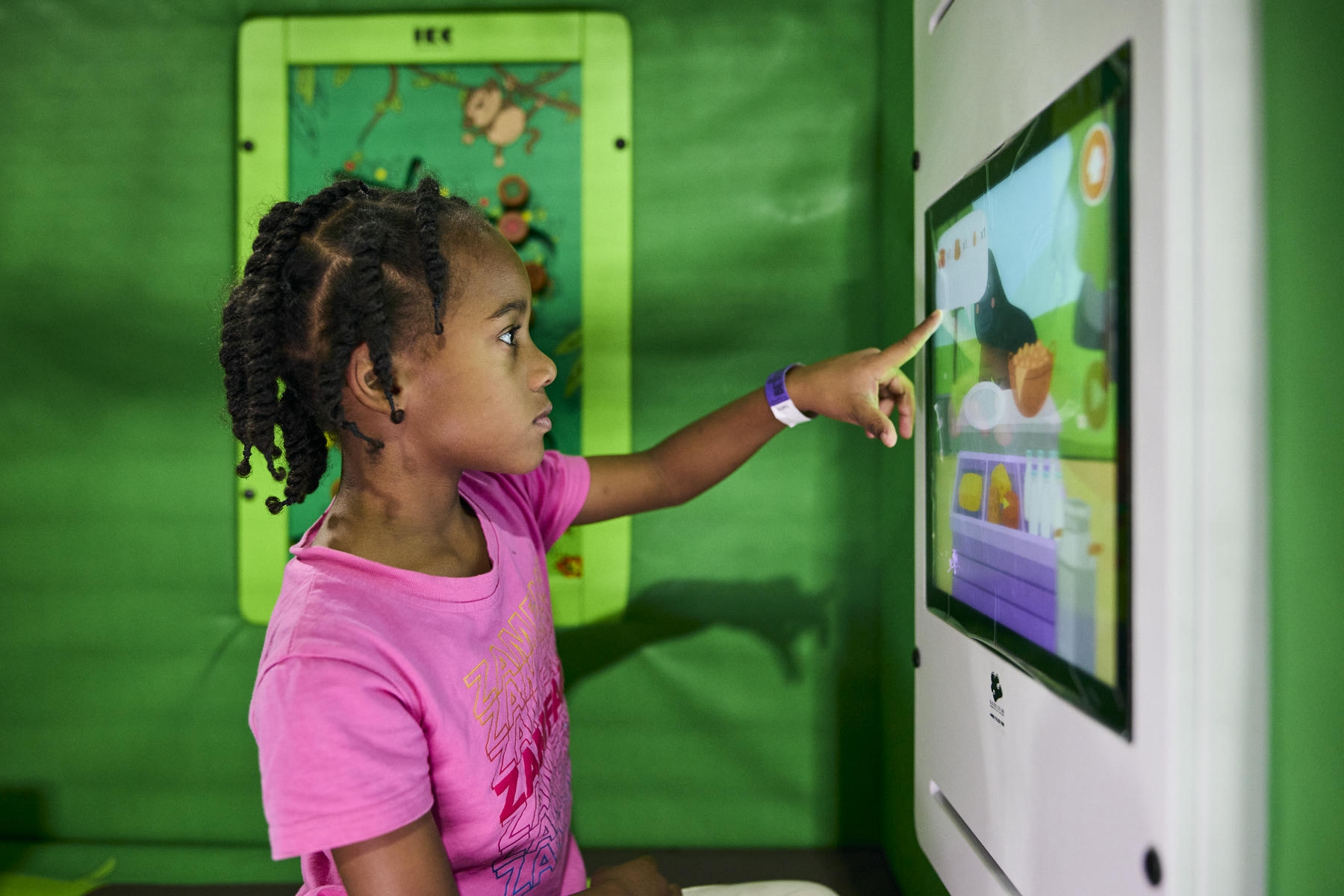
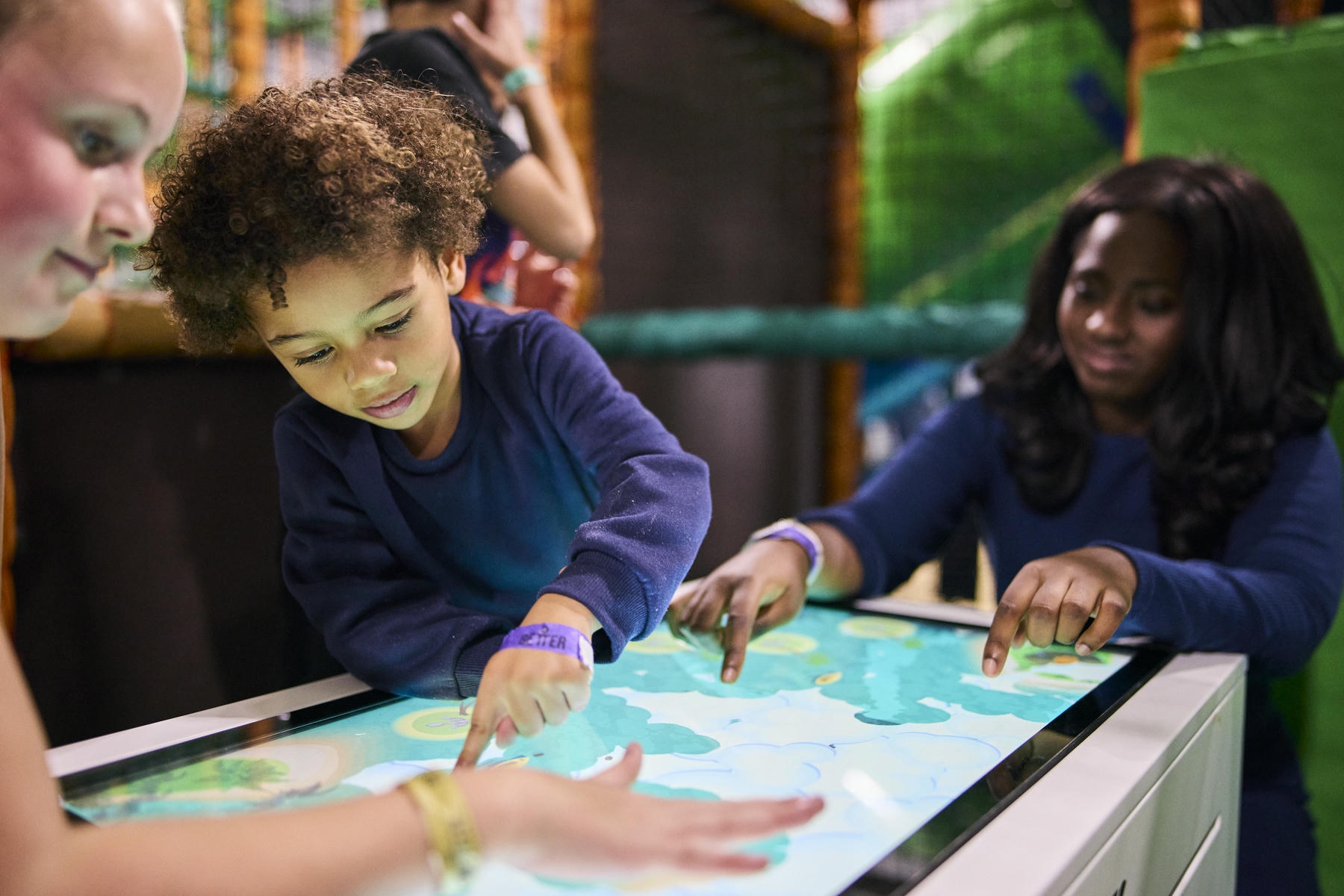
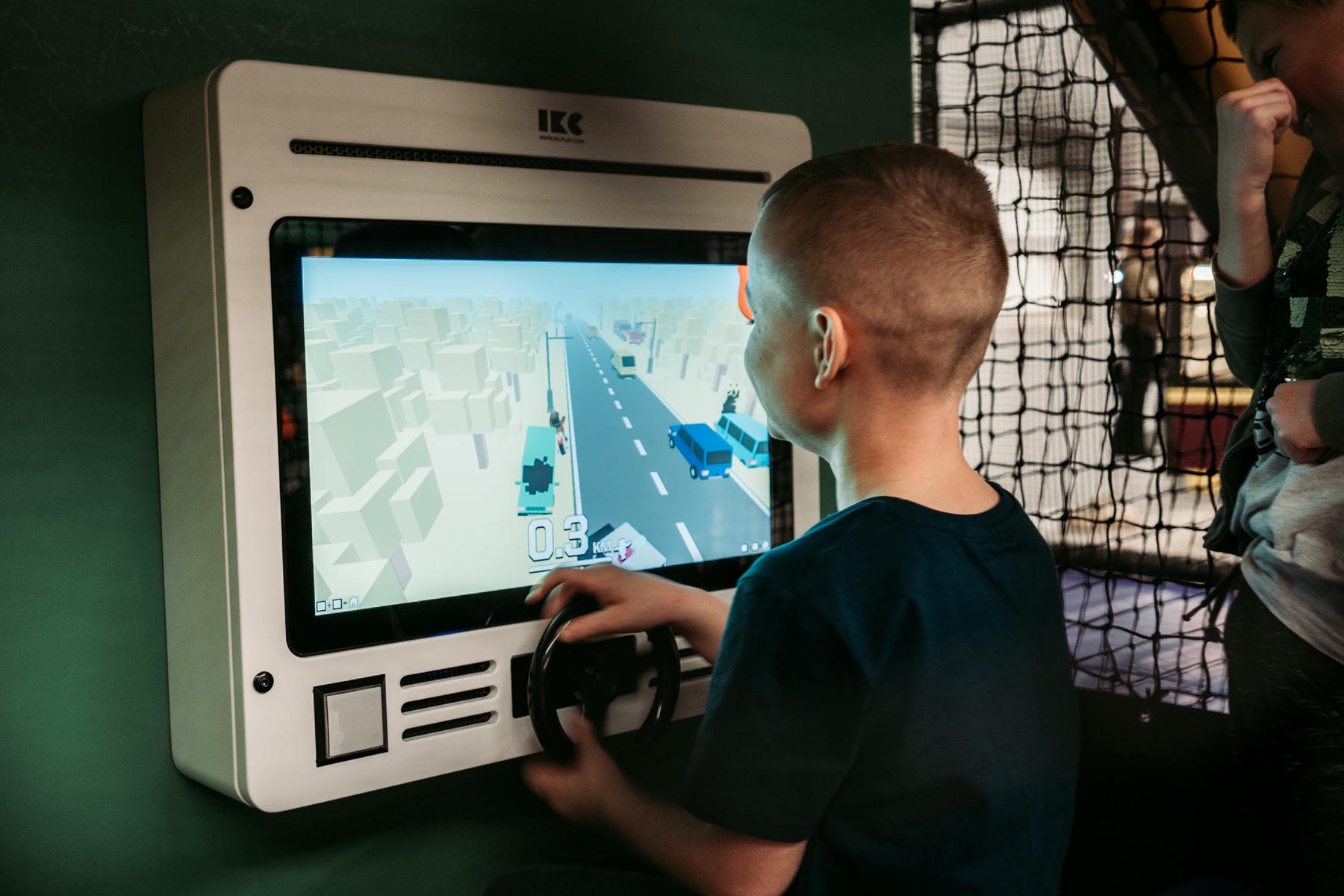
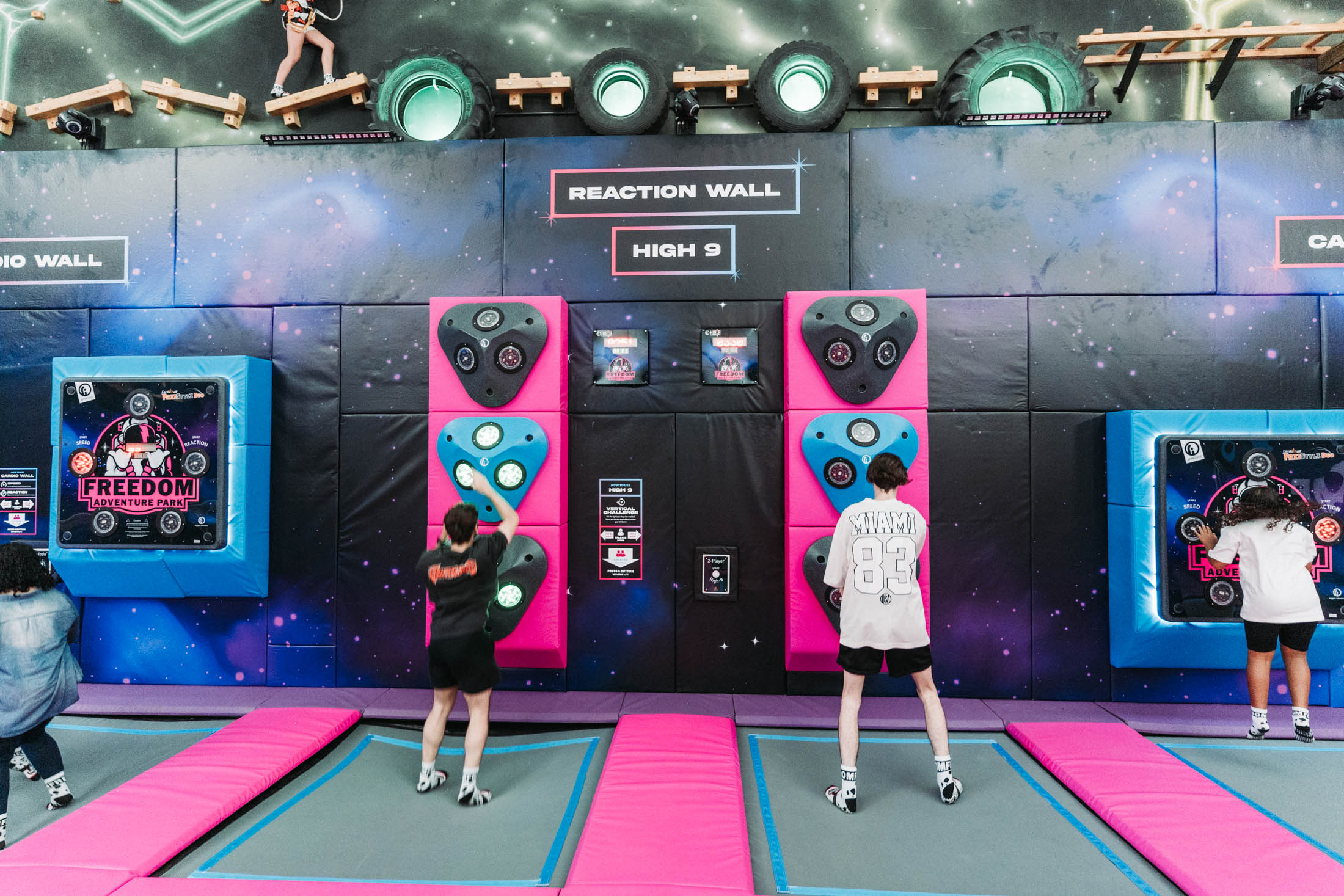
It’s worth being specific here, because “interactive” can be used loosely. For this article and for how we approach it at The Play Company, interactive play equipment is any play installation in which the equipment responds to the player.
That response might be physical (hit a target and it lights up), digital (complete a course and your score appears on a leaderboard), or competitive (your performance is measured against other players in real time). The defining quality is that the equipment changes based on what the player does, creating a fundamentally different experience from moving through a static structure.
The most common types we install across indoor play venues include:
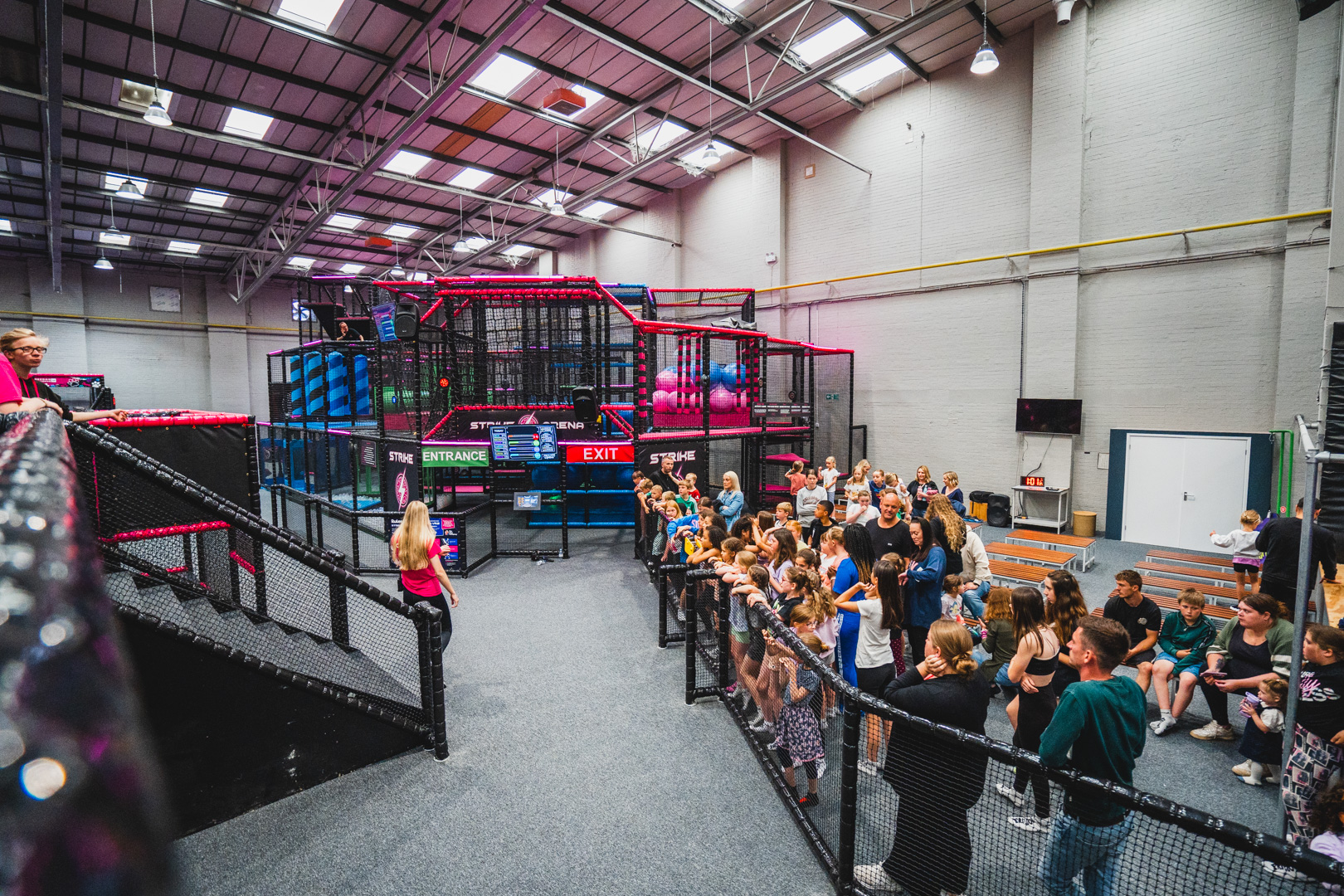
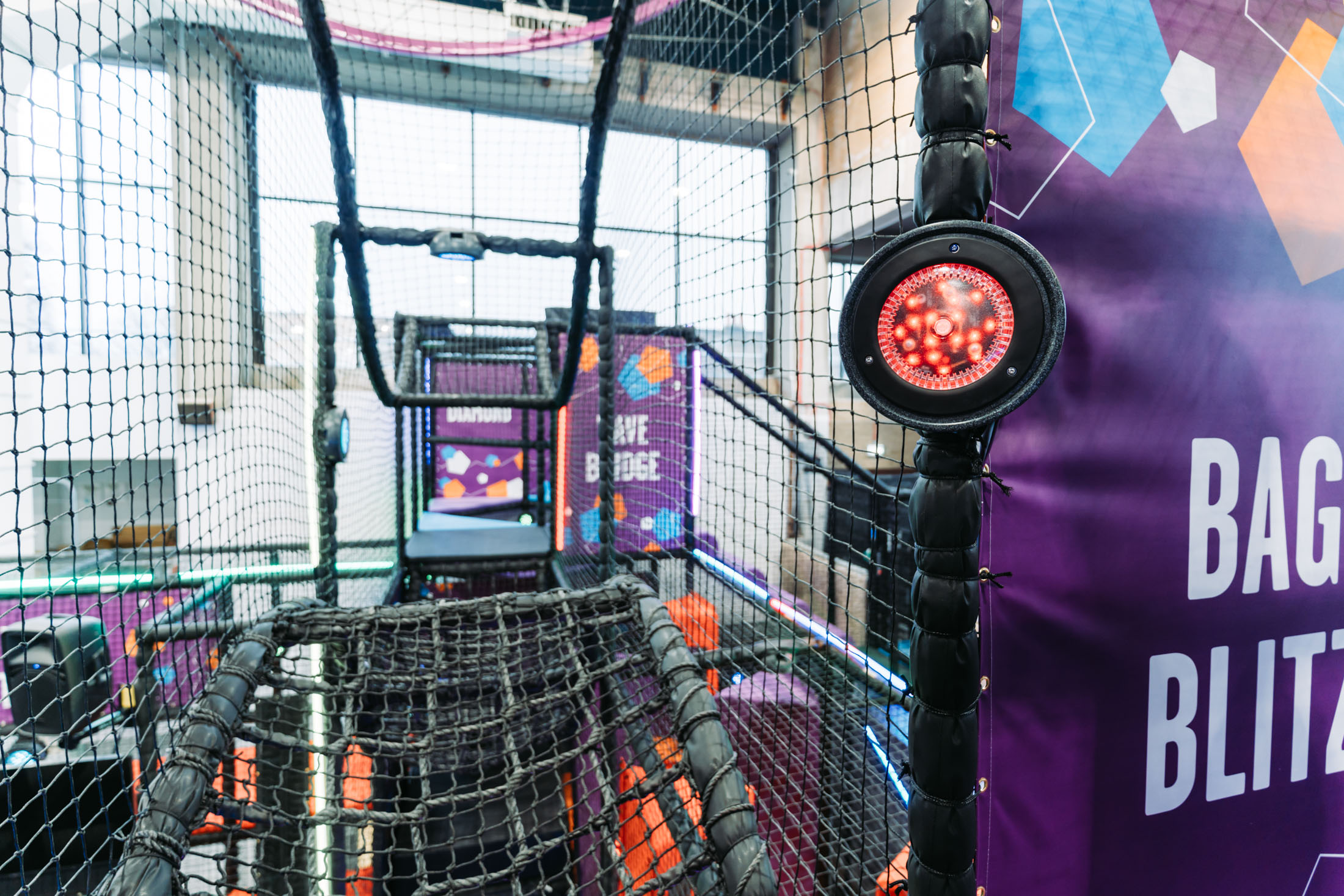
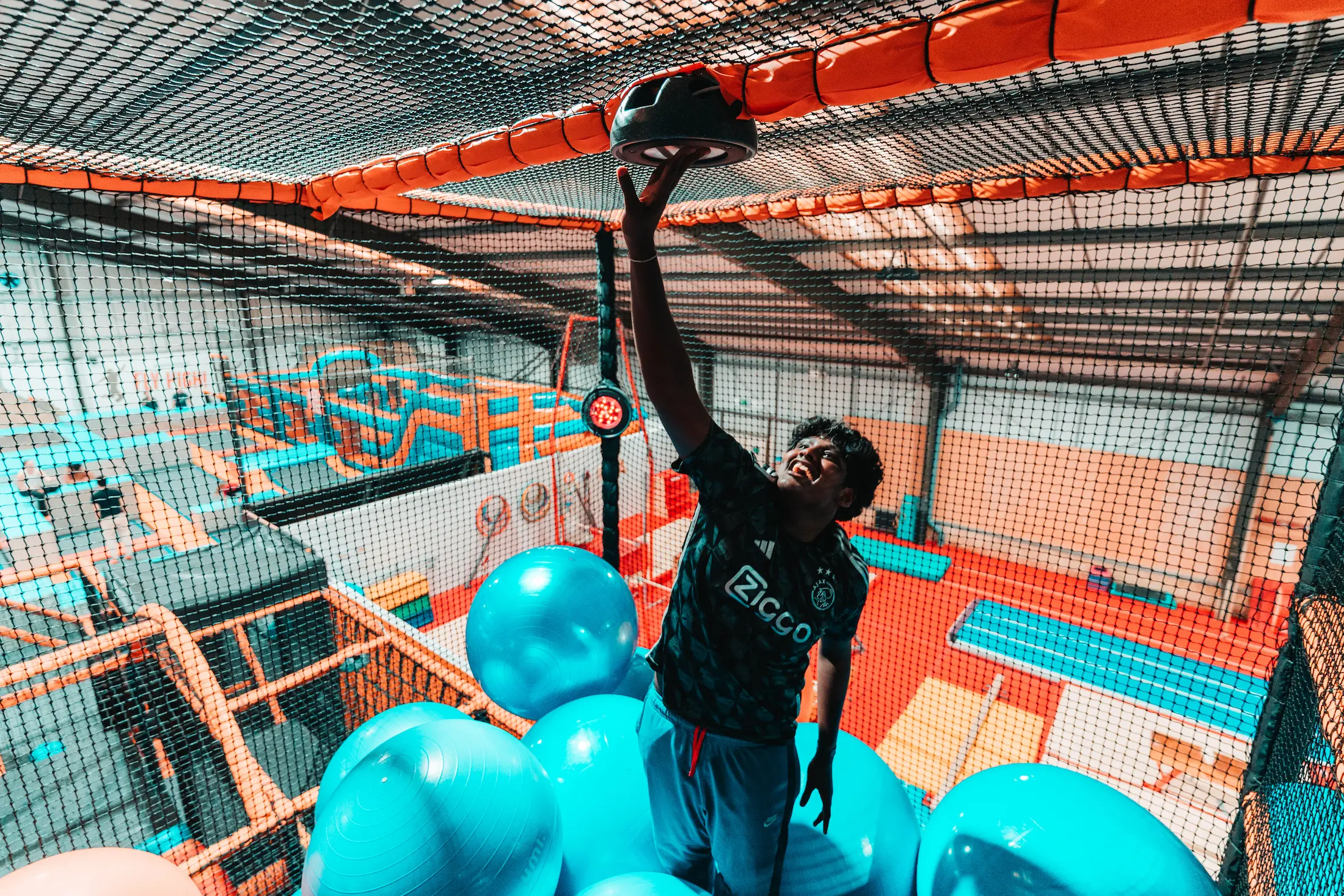
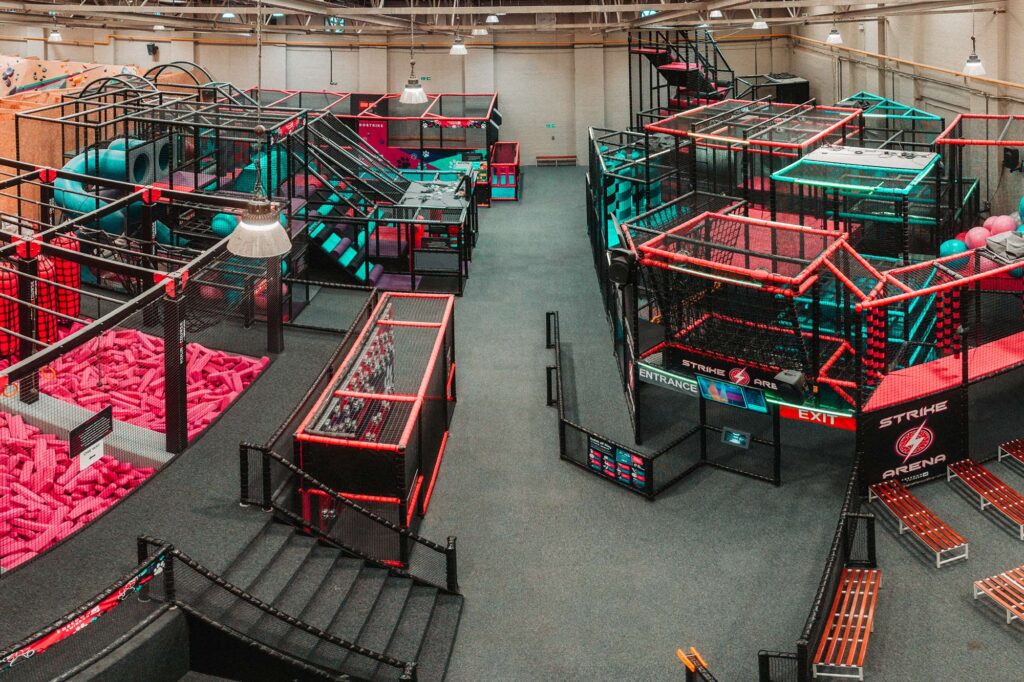
Strike Arena
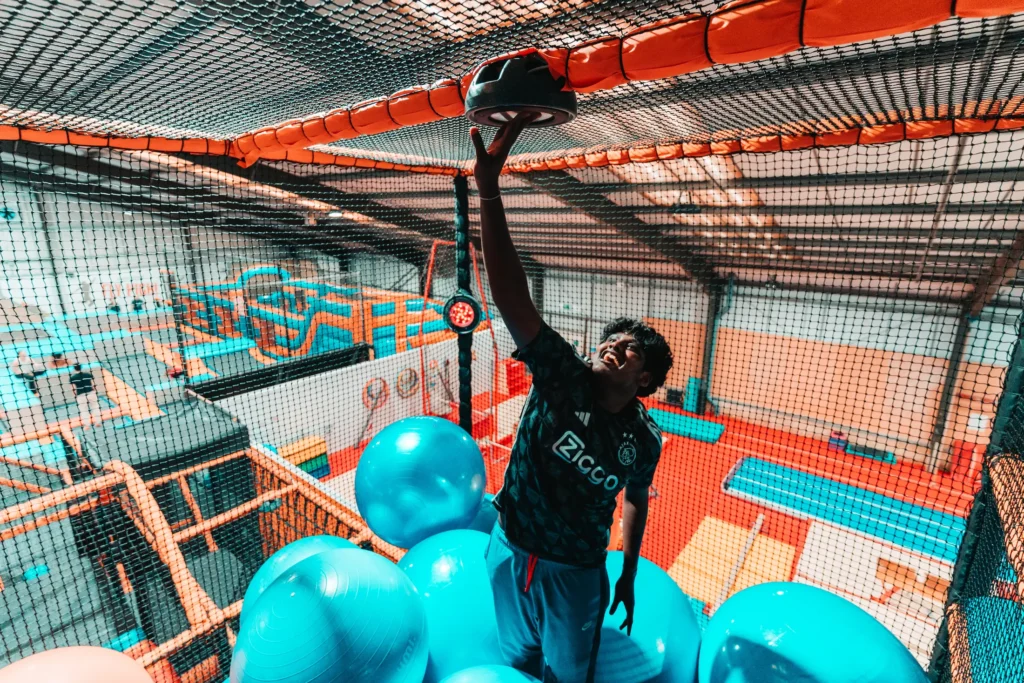
A competitive, motion-sensor arena game where players score points by hitting illuminated targets. Works for a mix of age groups, is compelling to watch and invites competiton with different outcomes with each play. Generating natural footfall and crowd energy around it.
Read more: What Is a Strike Arena? Why Leisure Venues Are Adding It.
Interactive Football Pitches
Astrotufed or Airtrack smart football pitches using ball-tracking sensors and LED boards to add challenges, scoring, and competitive play to a kicking area. High throughput, easy to monetise, and naturally engaging for groups.
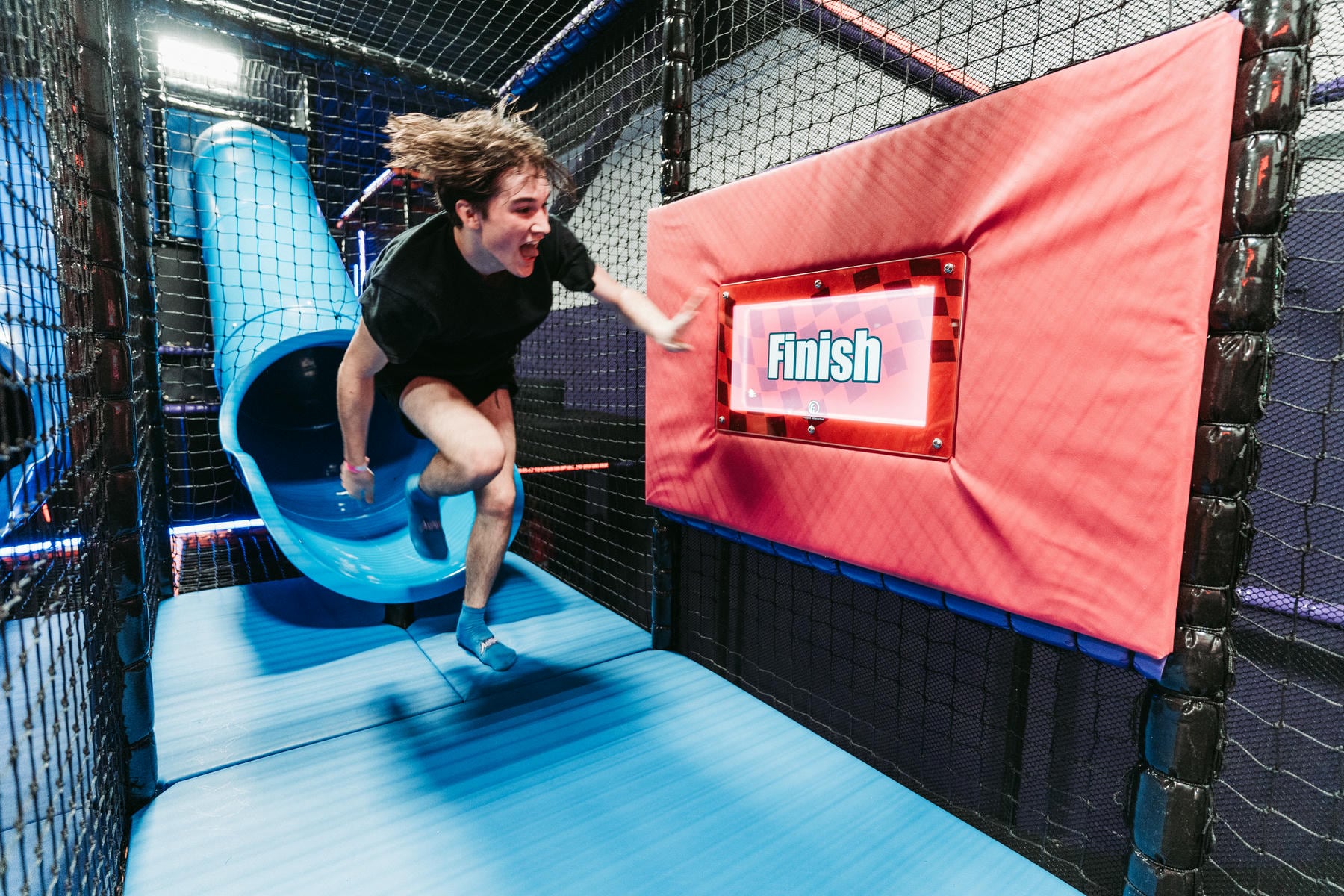
Ninja and Obstacle Courses
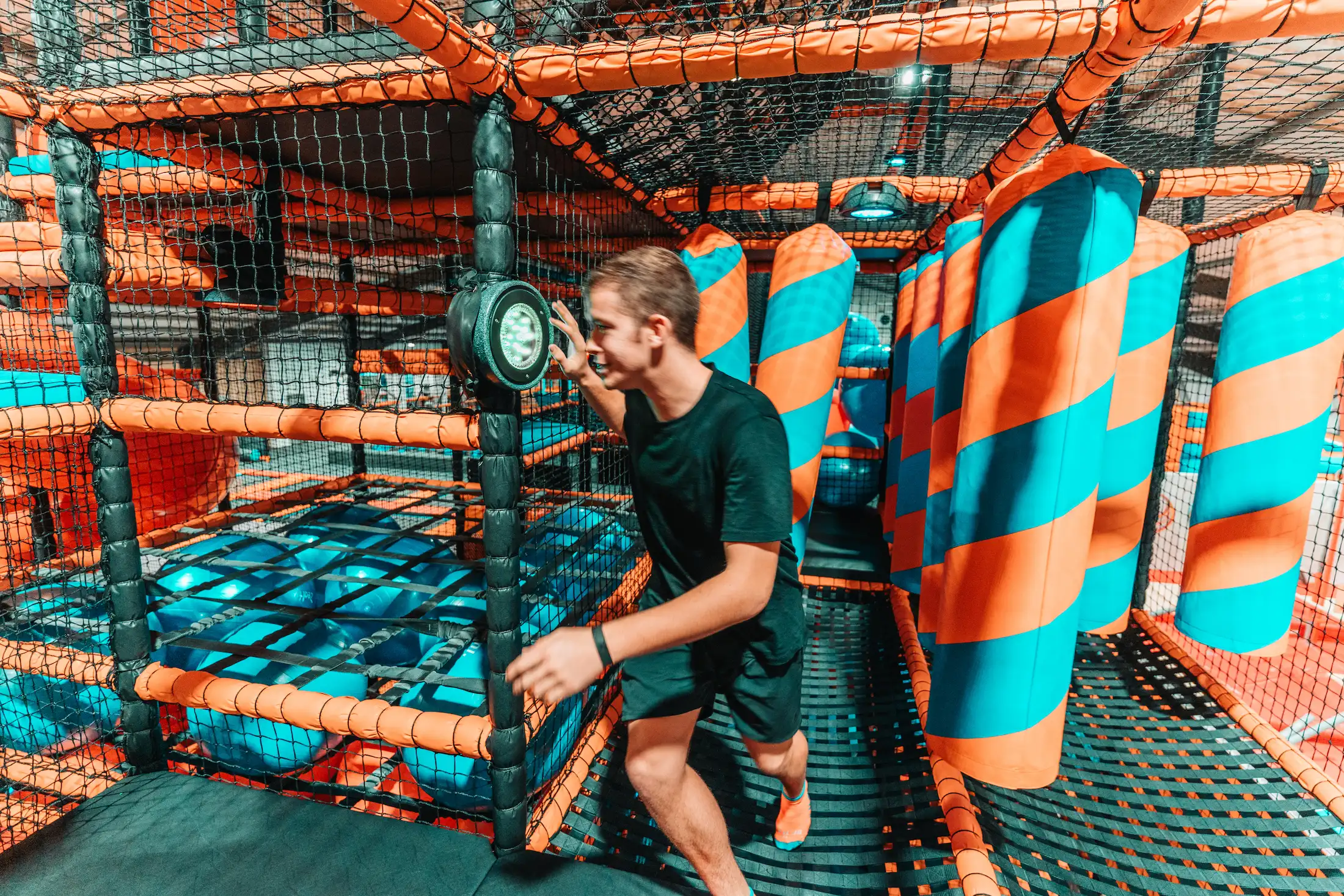
Ninja Courses are a spin feature, twin-lane obstacle courses, where both players must navigate their side of the mirrored course, jumping, swinging, sliding and running through to get to the end and hit their buzzer first. Great for friendly competition and quick throughput.
Pixl Games Systems
A gamified and interactive light-up floor, featuring over 50 games. Sounds simple, right? Not when you have to get from one side to the other without touching the red squares, or when you need to jump on more blue square panels than your opponent. Quick, operator-free and highly replayable.
The repeat visit problem, and how interactive equipment solves it
Here’s the core commercial challenge with traditional soft play and indoor play spaces: the experience doesn’t evolve. A child who visits on a Tuesday in October has broadly the same experience they’d have on a Saturday last March. The equipment is the same. The course is the same. The experience is the same.
The ceiling of what’s possible has already been reached.
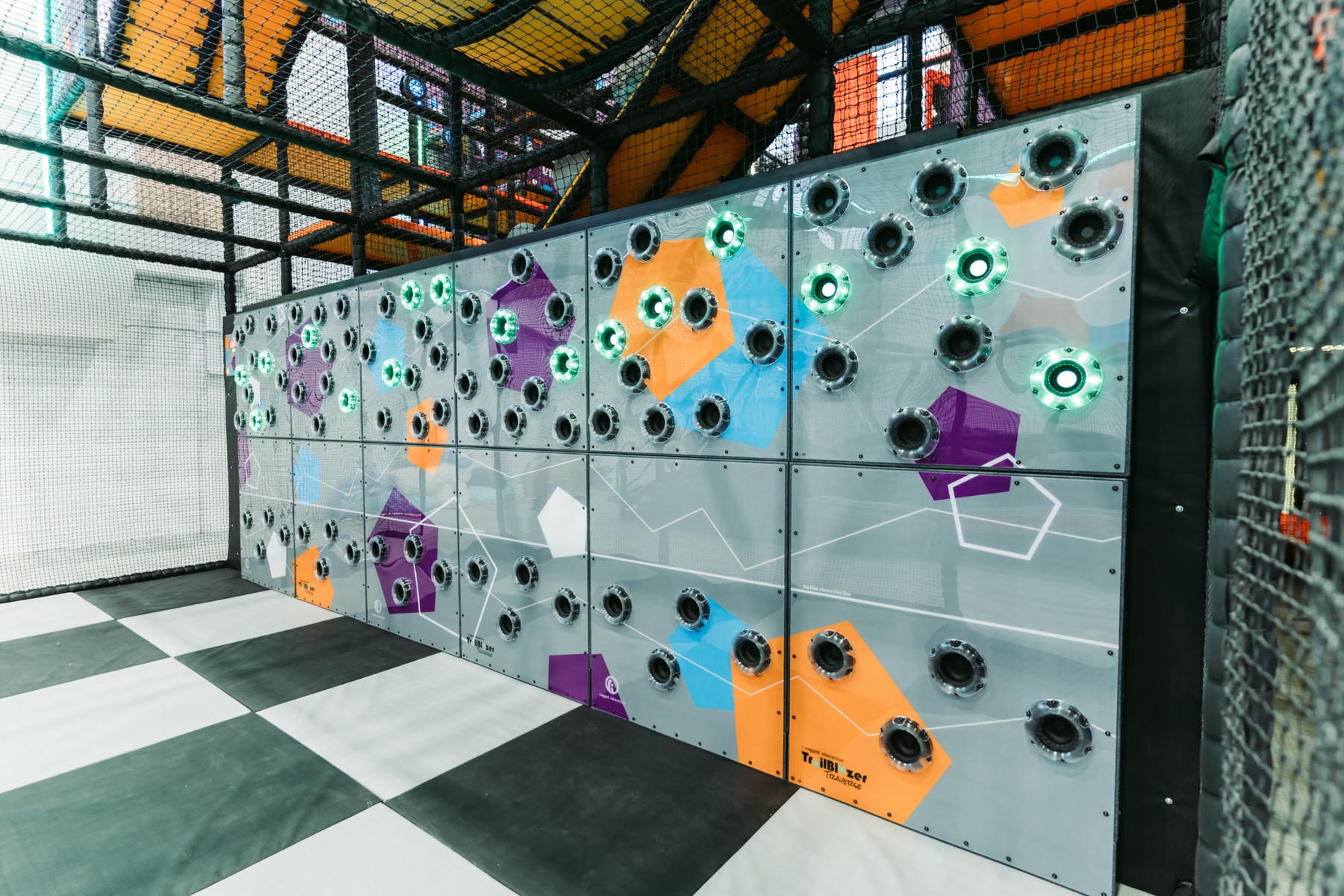
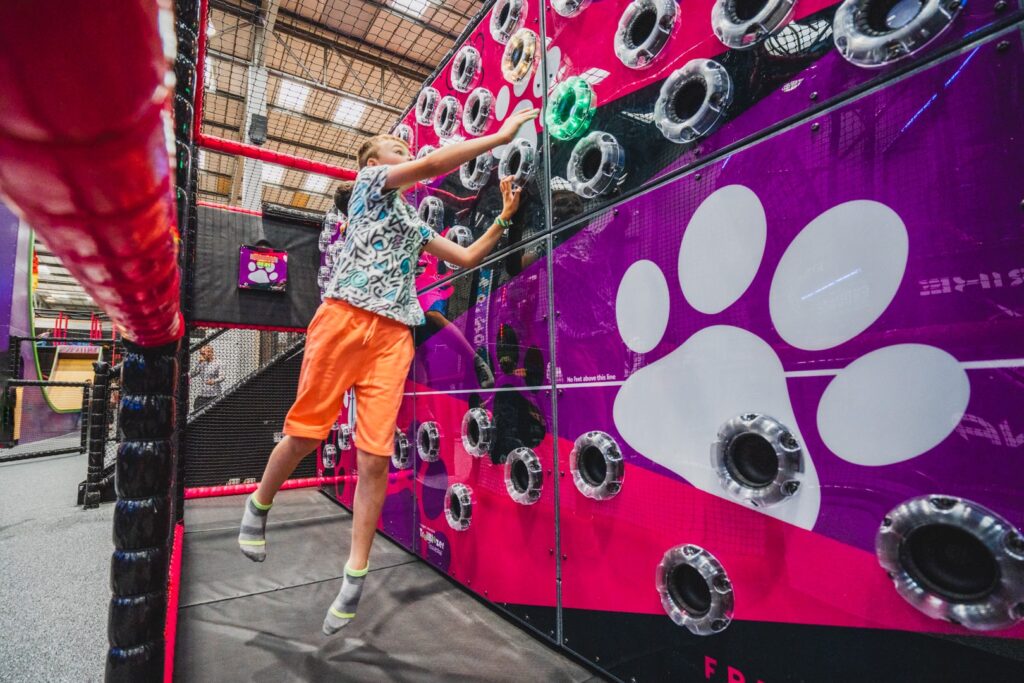
Interactive play equipment breaks that ceiling because the experience is variable by design. In a Strike Arena game, no two rounds play out identically. On a Valo Motion climbing wall, the game changes every session. On a pixel floor system, the games can be updated by venue staff ( or even the guests ) in seconds.
The equipment ages much more slowly in the eyes of the visitor because the experience keeps feeling new!
Venues that have moved to an interactive led offering consistently report:
- Longer average dwell times per visit: Families staying 20–40 minutes longer than in equivalent soft play-only venues
- Higher secondary spend: Longer visits mean more café revenue, more party bookings, more add-on purchases
- Stronger membership and season ticket uptake: Visitors see value in returning because the experience won’t feel identical
- Increased attraction to older children and adult groups: Who would typically age out of a soft play offering by eight or nine
- More organic social media content: Interactive play is inherently shareable in a way that static soft play simply isn’t
What this looks like in real life
The shift to interactive play isn’t theoretical, we’ve seen it play out across venues we’ve worked with across the UK.
Check out two of the many examples below as proof, we know about interactives.
GLL Sutton and their Interactive Strike Arena Retrofit
Adding an interactive play activity is not just adding a feature; it’s increasing capacity, throughput and a customers time at your site.
GLL took what we suggested and ran with a retrofit solution, leading to results even they didn’t expect.
Freedog Swindon upgrades their site with multiple interactive activities
Freedog didn’t sit on our suggestions within their rock climbing indoor space, they ran with it. Taking not just one interactive experience into their park but four, boosting their offering to the public and increasing their adveraeg revinue spend
We've Installed Interactive Equipment with a lot of Happy Customers
Considering an upgrade to your venue's indoor play offering?
We work with leisure centres, holiday parks, and FECs across the UK to design and install interactive play environments. Get in touch for a no-obligation conversation.
Interactive equipment isn't a replacement, it's one layer on-top another
It’s worth being clear: we’re not suggesting venues strip out their existing soft play and start again. For under-fives especially, traditional soft play remains the golden standard for indoor play areas. The tactile, physical, and exploratory experience it provides is irreplaceable, and no interactive system does it better.
The operators getting the best results are those who think of interactive equipment as a layer added on top of, or alongside, what they offer… a well-designed soft play foundation. Younger children have a dedicated space designed for them. Older children and adults are drawn into interactive zones that keep the whole group engaged without anyone compromising on the fun they can partake in.
This also solves a real operational problem: the older sibling problem.
Any leisure centre manager will tell you that a nine-year-old dragged along to a toddler soft play session is a liability. Interactive equipment gives the older visitor their own compelling experience, which means the family stays longer and spends more, and they will come back more willingly next time.
What to look for in a design and installation partner
If you’re considering introducing interactive play equipment into your venue, the quality of your design and installation partner matters more than it does for traditional soft play. Interactive systems require careful integration with your existing layout, with your electrical infrastructure, and with the overall flow of your venue, because no one wants to stand in a queue for hours on end.
When evaluating partners, look for:
- Experience installing the specific systems you’re considering — not just soft play generally
- Case studies from venues of a comparable scale and type to yours – we have lots of these!
- Ongoing maintenance and servicing capability — interactive equipment requires continued support in a way that static structures don’t
- Design flexibility — the ability to integrate interactive elements into a wider venue concept rather than dropping in a product catalogue item
- Relationships with the technology manufacturers — so issues get resolved quickly when they arise, and you don’t need to go chasing everyone to get something back up and running.
As an end-to-end design, manufacture, and installation business, The Play Company manages the full project from initial concept through to handover and site opening – see our Our Process page – including having working relationships directly with technology partners like Valo Motion, Pixl Games, and Rugged Interactive, to ensure seamless integration into your wider venue design and experience.
Download: The Interactive Play Equipment Lookbook
Real installations, product specifications, and ROI data from venues across the UK. Free for leisure operators and venue managers.
Frequently Asked Questions
Interactive equipment typically carries a higher upfront cost per square metre than traditional soft play structures, but the comparison changes significantly when you factor in revenue generation, dwell time uplift, and repeat visit rates. Our complete cost guide covers the full picture, including what different installation types typically cost across different venue sizes.
Yes — in fact, retrofit is one of the most common projects we undertake. Many leisure centres and FECs use an equipment refresh as the trigger for introducing interactive elements into their existing footprint. The key is working with a partner who can design around your current layout rather than requiring you to start from scratch.
This varies by product. Strike Arena and ninja-style courses work well from around age six upwards and have strong adult appeal. Interactive climbing walls typically engage from age four. Projection-based digital play zones can serve children as young as two. The best venue designs layer different types to cover a full age range rather than picking a single product for everyone.
Most interactive systems require annual servicing and occasional software updates — the maintenance profile is different to traditional soft play rather than necessarily more intensive. The Play Company offers ongoing maintenance packages across both traditional and interactive installations, so you have a single point of contact for your whole venue.
Strike Arena is a motion-sensor competitive game where players score points by hitting illuminated targets within a timed round. It works for individual players and groups, generates natural spectator engagement, and is one of the highest repeat-play attractions currently available for leisure venues. See our dedicated guide: What Is a Strike Arena? Why Leisure Venues Are Adding It.
We cover more than just Interactive Equipment

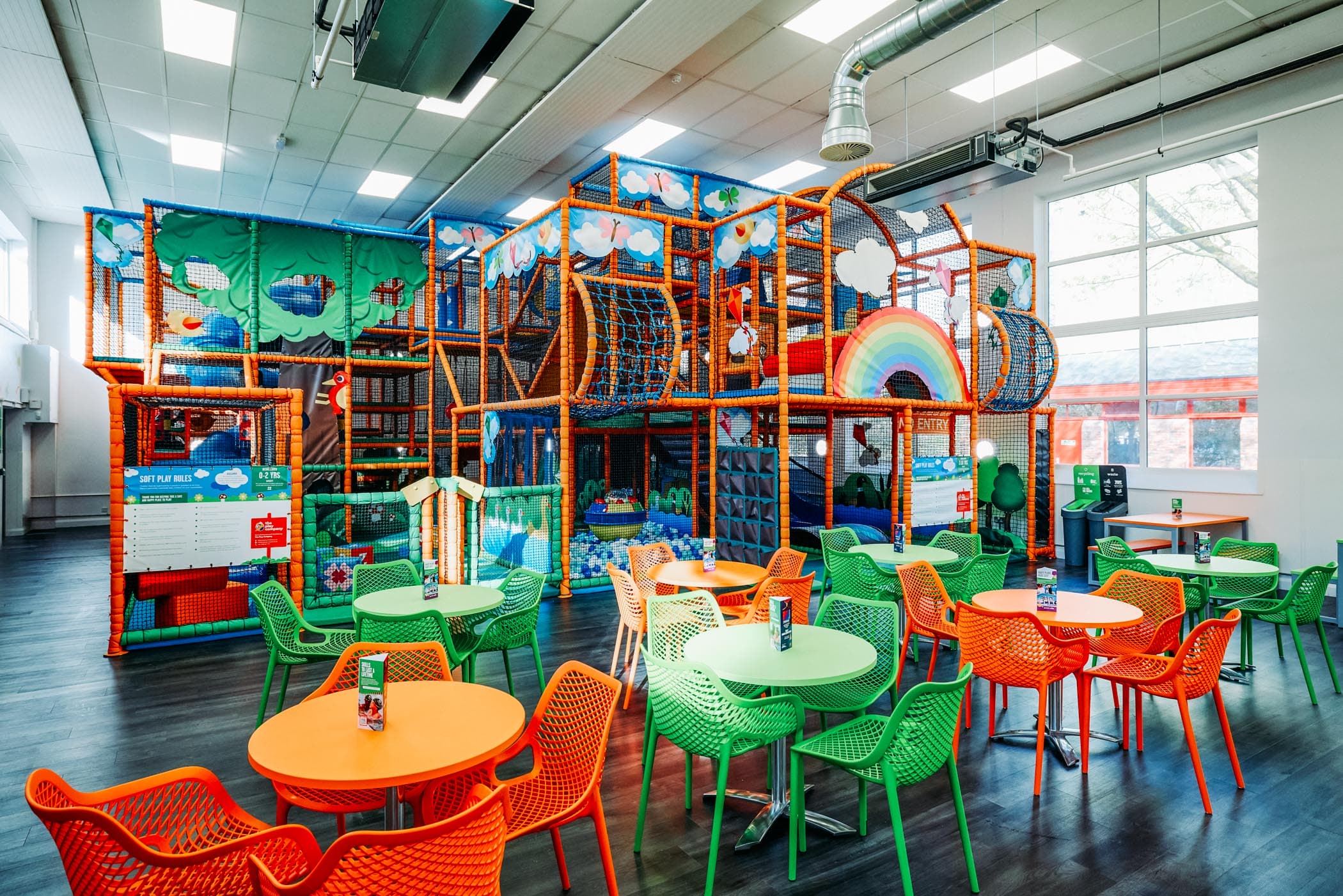
Soft Play Areas
High-capacity, multi-level play structures built for maximum fun, flow, and commercial impact in your venue.
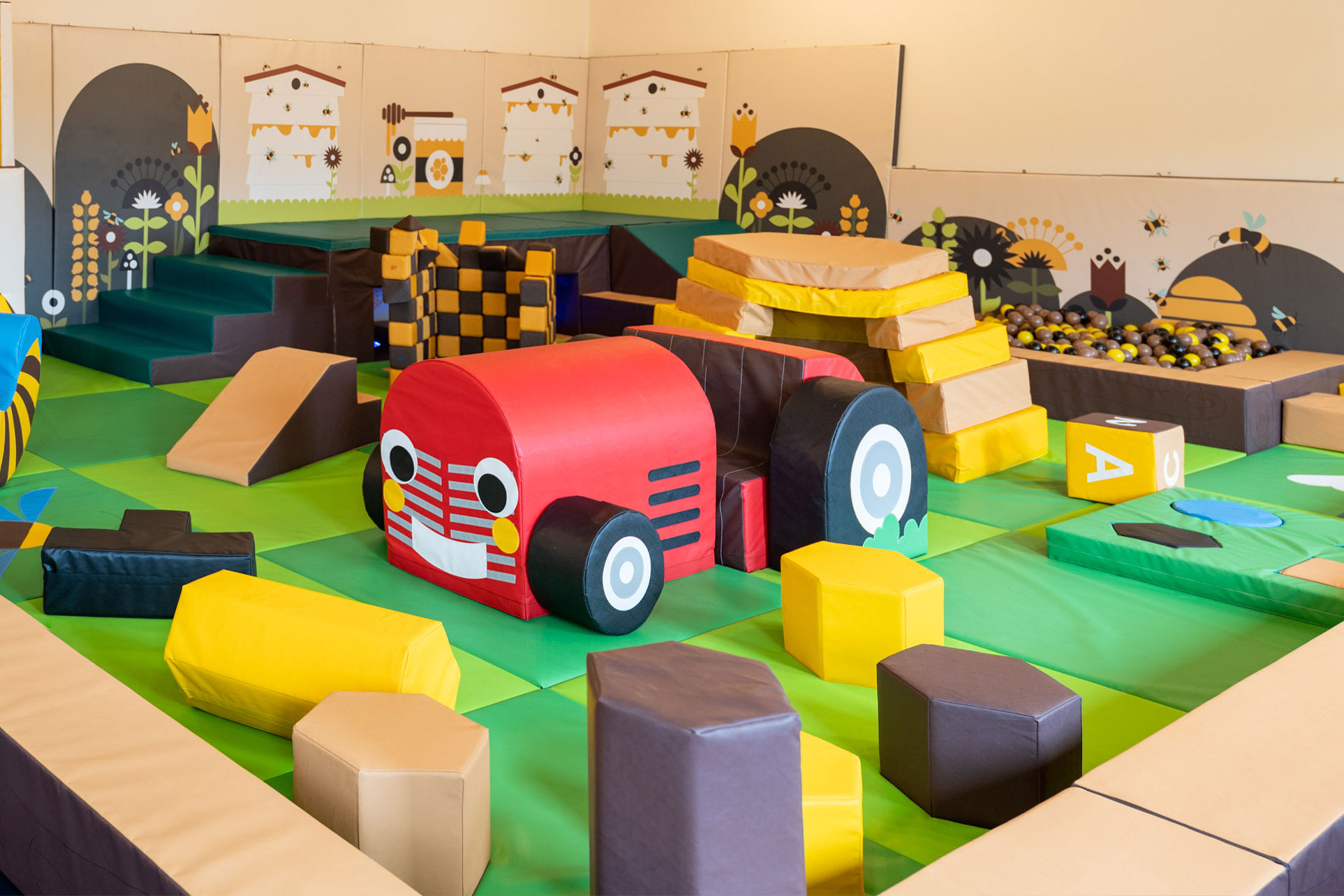
Toddler Areas
Safe, calming spaces designed for younger visitors, improving guest experience and freeing up your main play frame.
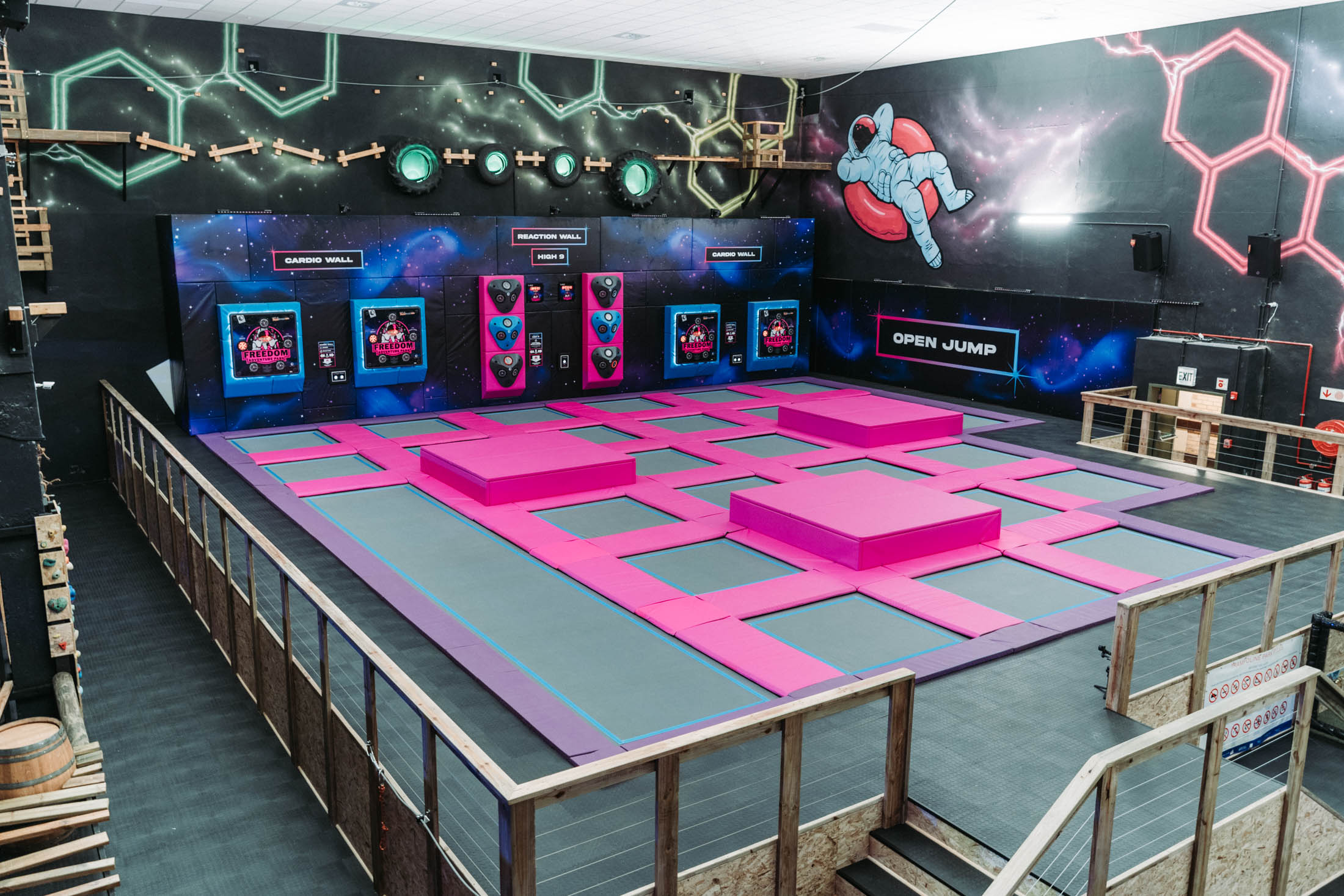
Trampoline Parks
A high-energy attraction that appeals to a wide audience and boost repeat visits for every customer.

Inflatables Parks
Big visual impact, massive play value, and minimal operational demands, all in one compact space.
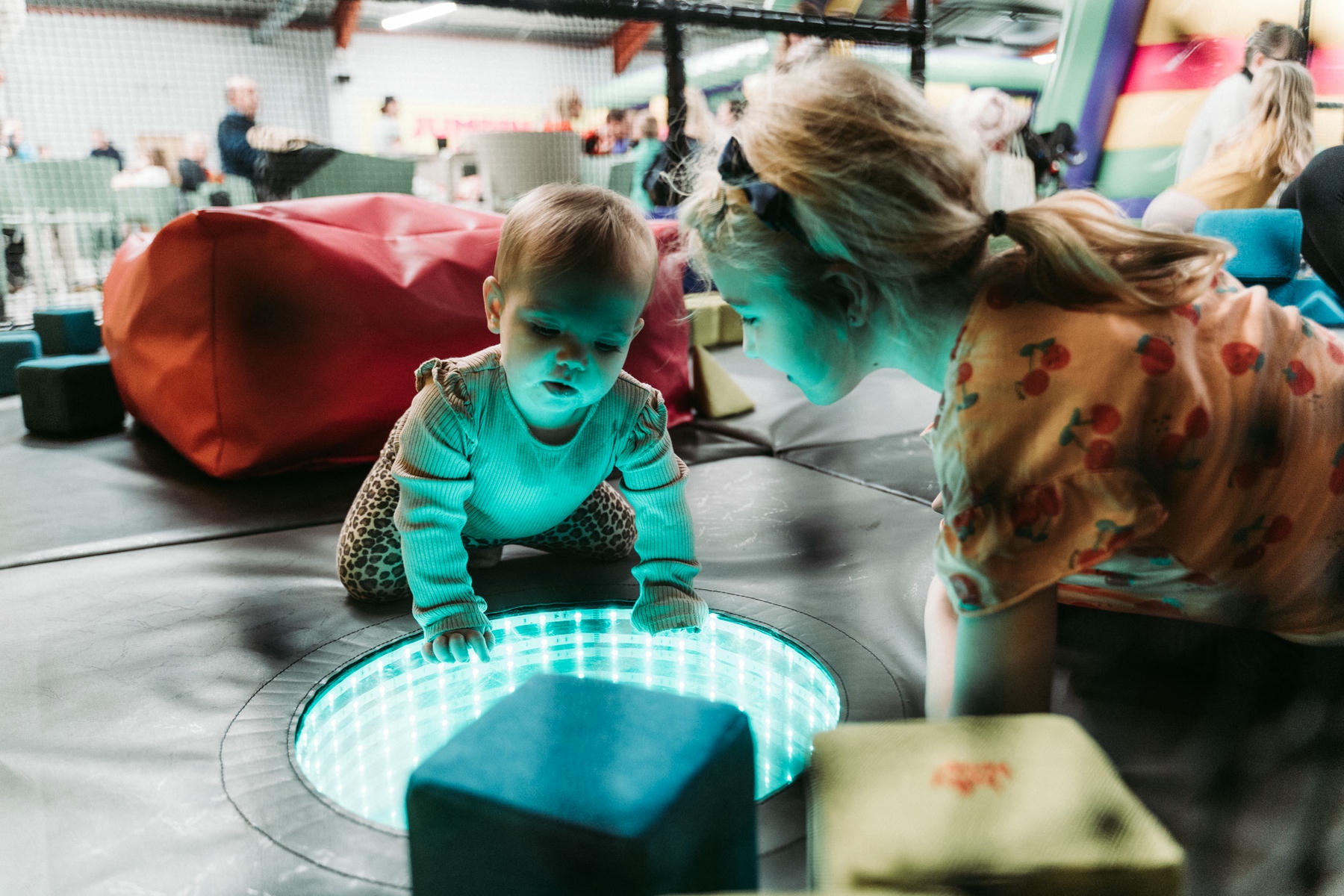
Sensory Areas
Inclusive, calming environments that support children with additional needs and broaden your venue’s accessibility.
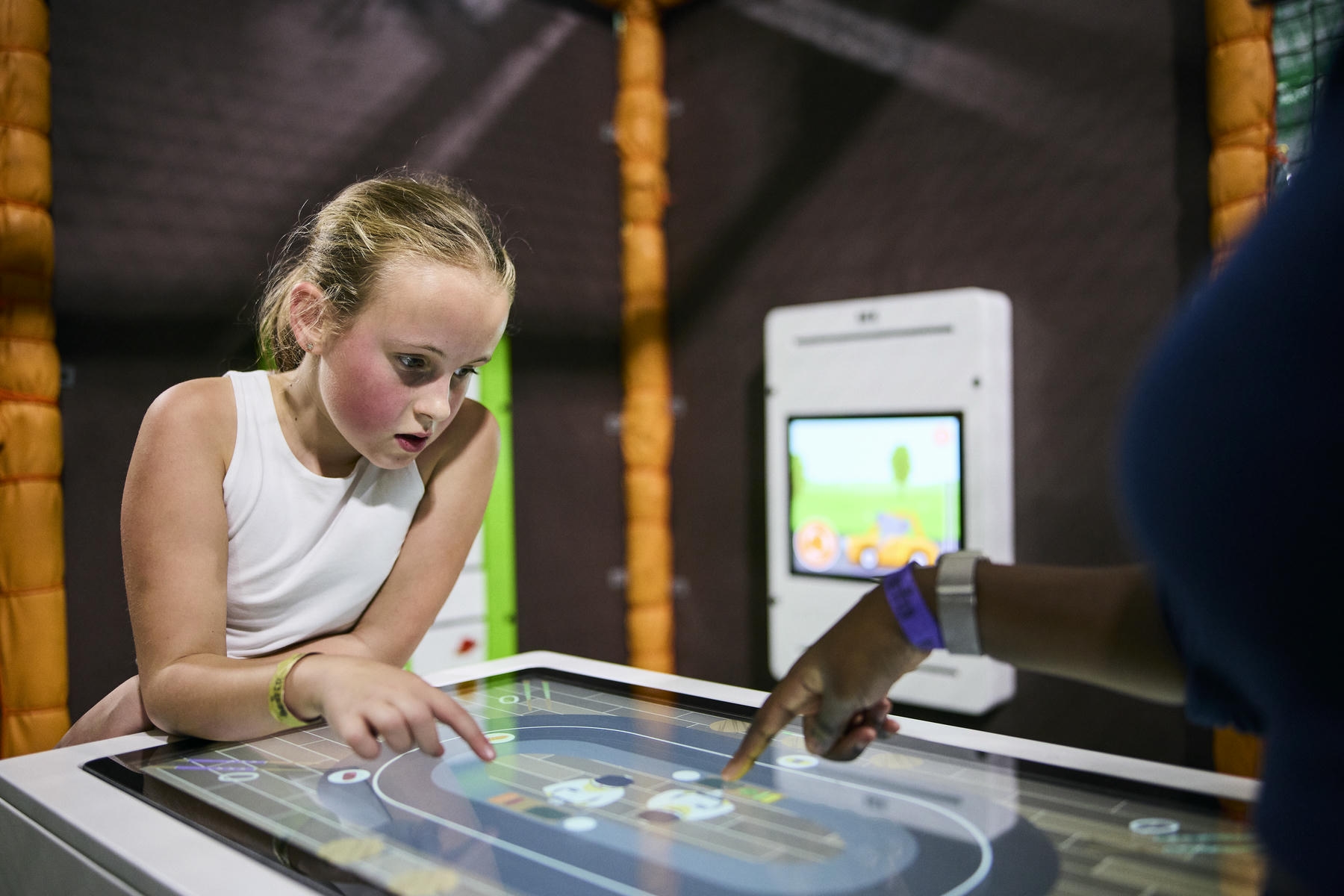
Interactive Equipment
Tech-driven play features that encourage engagement, competition, and repeat play for guests of all ages.
Ninja Courses
Fast-paced obstacle courses for older children and teens, perfect for expanding your age range.
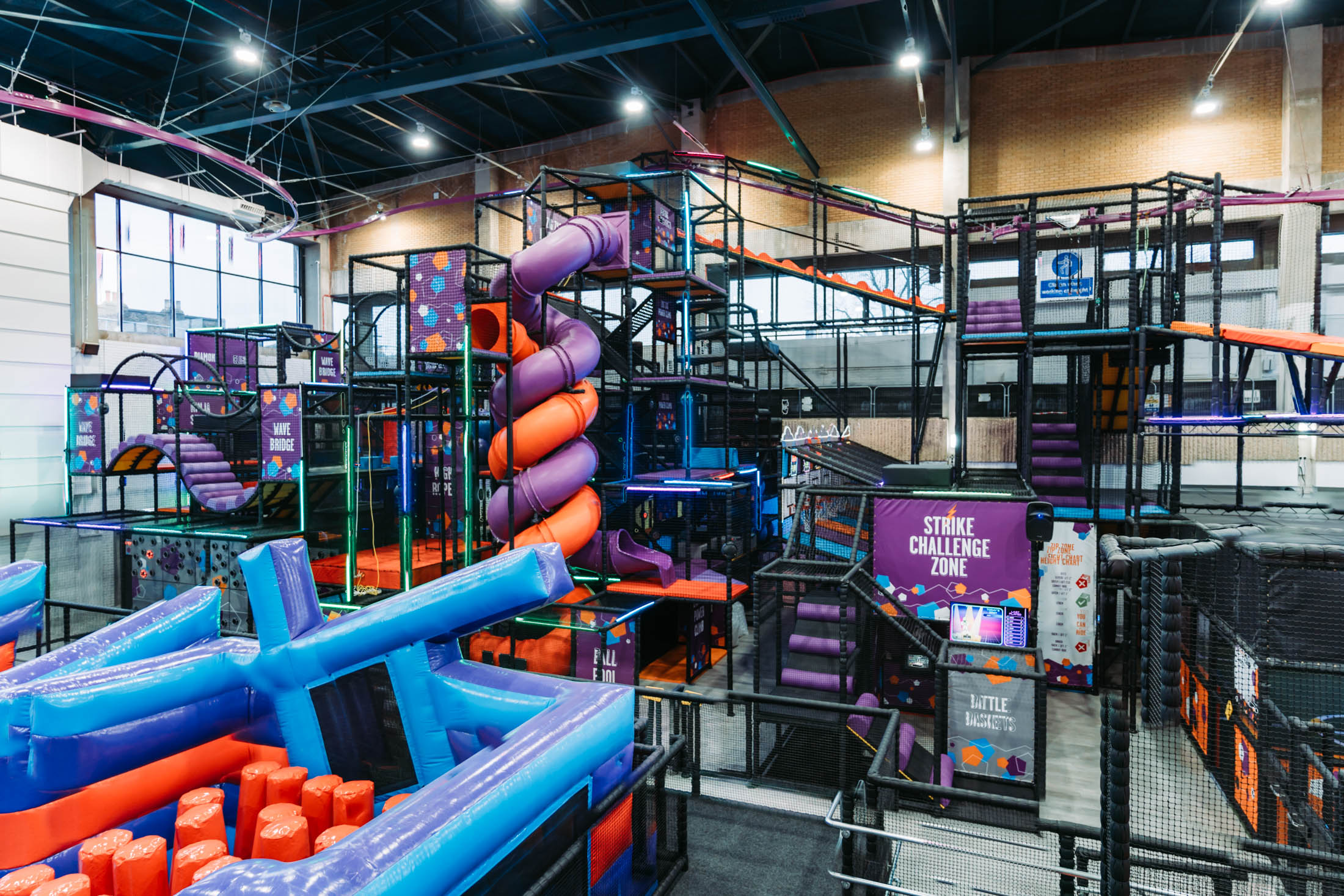
Strike Arena
A high-energy, team-based arena designed for teens and adults, offering strong repeat-play value.
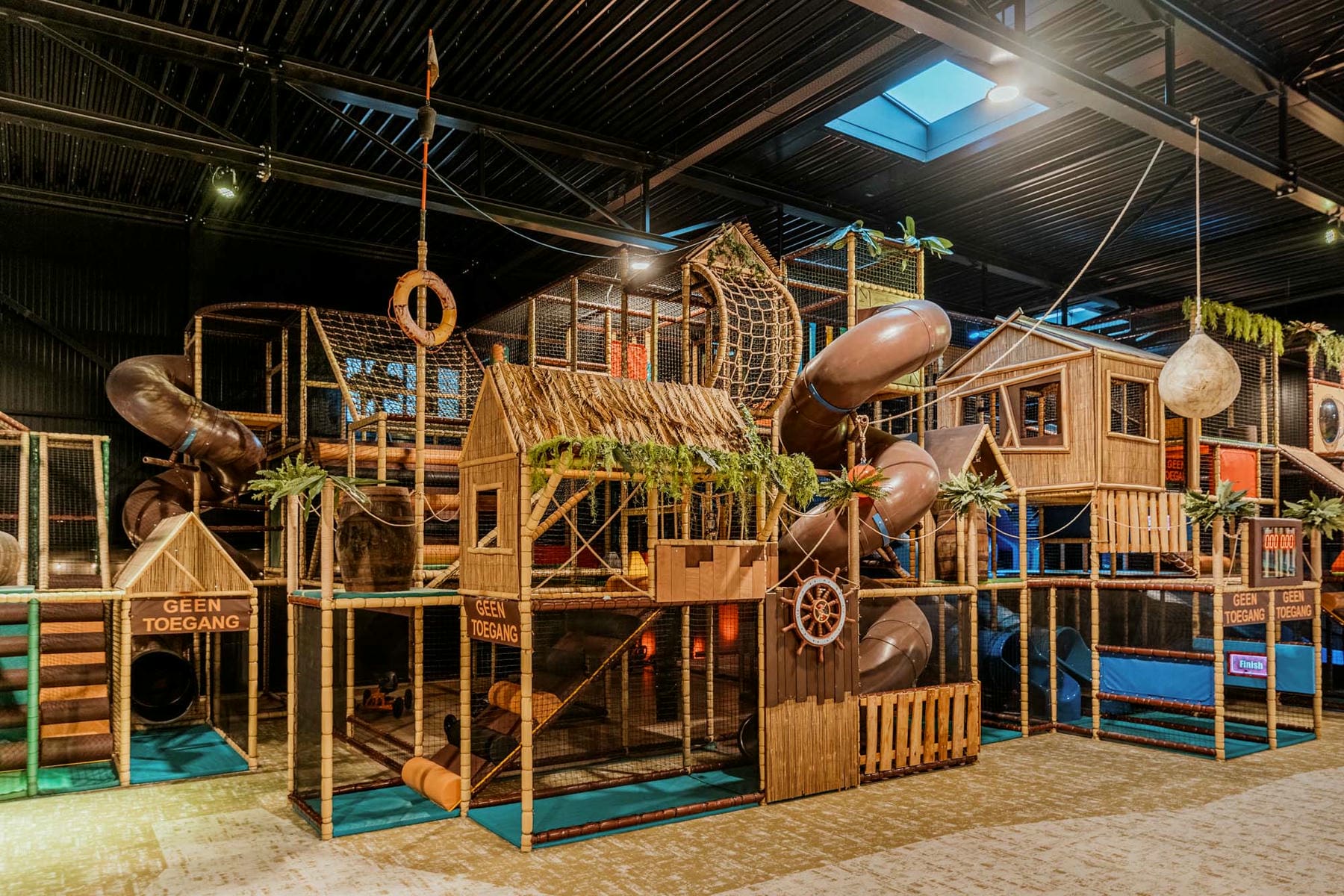
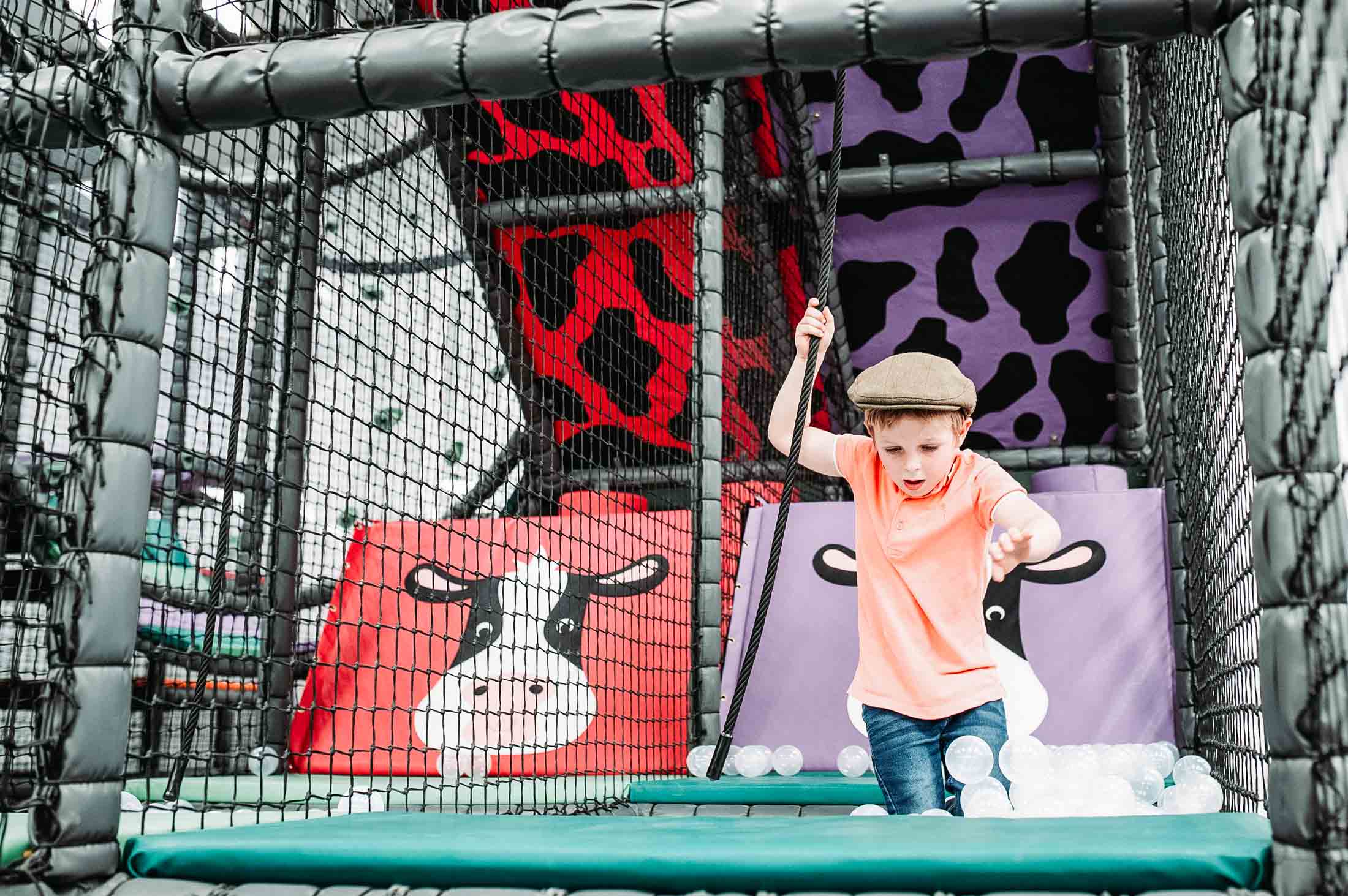
Themed Soft Play
Immersive, visually striking play that blends a customised theme into your venue’s identity and brand.